Introduction
Every culture has its own way of saying “you are now an adult”. Some mark it with a religious ceremony, others with a party, and some with tests of courage and endurance. These coming-of-age rituals, which anthropologists call rites of passage, reveal what each society values most.
Key Takeaways
- Rites of passage usually follow three stages: separation, transition and return
- Japan and South Korea hold national coming-of-age days
- Religious rites include the bar and bat mitzvah, confirmation and the Hindu sacred thread ceremony
- Some rituals, like Vanuatu’s land diving or the Sateré-Mawé bullet ant ritual, test courage and endurance
What Is a Rite of Passage?
In 1909, the French ethnographer Arnold van Gennep described rites of passage as having three stages: separation from the old status, a transition period, and incorporation into the community with a new status. Later, anthropologist Victor Turner studied the middle, “liminal” phase, when the young person is no longer a child but not yet an adult.
This pattern appears again and again in coming-of-age rituals around the world.
The Most Isolated Tribes in the World: Who They Are and Why They Avoid Contact
Rituals Across Continents
Asia
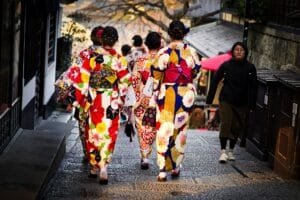
Japan: Coming of Age Day (Seijin no Hi). On the second Monday of January, cities across Japan hold ceremonies, called seijin-shiki, for young adults. Many women wear colorful furisode kimonos and many men wear suits or traditional hakama. Japan lowered the legal age of adulthood from 20 to 18 in 2022, but most municipalities still hold the ceremony for 20-year-olds.
South Korea: Coming of Age Day. On the third Monday of May, South Korea celebrates young people turning 20. Some places hold traditional ceremonies based on old Confucian rites, called gwallye for men and gyerye for women.
India: Upanayana. In this Hindu ceremony, traditionally performed for boys of certain communities, the young person receives a sacred thread worn across the body and begins formal religious study.
Africa
South Africa: Ulwaluko. Among the Xhosa, young men traditionally go through ulwaluko, an initiation that includes circumcision and a period of seclusion, during which they are taught by elders about the responsibilities of manhood. When they return, they are recognized as men.
Maasai: Emuratare. Among the Maasai of Kenya and Tanzania, boys are traditionally initiated as young warriors (moran), followed years later by the eunoto ceremony that marks their passage to senior warrior status.
Europe and the Middle East
Bar and bat mitzvah. In Jewish tradition, boys become bar mitzvah at 13 and girls become bat mitzvah at 12 or 13, taking on religious responsibilities. The occasion is usually marked by reading from the Torah in the synagogue, followed by a celebration.
Confirmation. In many Christian churches, young people confirm their faith in a ceremony during their teenage years. In Germany, Protestant Konfirmation usually takes place around age 14. In the former East Germany, a secular alternative, Jugendweihe, is still popular.
North America
Apache Sunrise Ceremony. Among the Western Apache, girls who reach puberty may take part in the Sunrise Ceremony, a ritual lasting several days in which the girl reenacts the story of White Painted Woman, dances for hours and receives blessings from her community.
Sweet sixteen and 18th birthdays. In the United States, turning 16 often means a driver’s license and a special party, and 18 marks legal adulthood.
Eternal Flames of Nature: Fires That Have Burned for Centuries
Latin America
Quinceañera. In much of Latin America and among Latino communities in the United States, a girl’s 15th birthday is celebrated with a quinceañera: often a religious ceremony followed by a big party with a waltz, family and friends. In Brazil, the equivalent is the festa de debutante or festa de 15 anos.
Sateré-Mawé bullet ant ritual. Among the Sateré-Mawé people of the Brazilian Amazon, boys wear gloves woven with bullet ants, whose sting is considered one of the most painful in the insect world. Enduring the stings, often repeatedly over time, is part of their path to becoming men.
Oceania
Vanuatu: Land diving (Naghol). On Pentecost Island, men and boys jump from tall wooden towers with vines tied to their ankles. The ritual is linked to the yam harvest, and a boy’s first jump is an important step toward manhood. It is often described as an inspiration for modern bungee jumping.
Aboriginal Australia. Many Aboriginal communities have traditional initiation ceremonies, during which young people are taught sacred knowledge, laws and stories. Many details are private and shared only with initiated members.
Ancient Underground Cities and Hidden Tunnels Around the World
Why Coming-of-Age Rituals Matter
These rituals do more than mark a birthday. They:
- Make a change of status visible to the whole community
- Pass knowledge and values from elders to young people
- Give young people a clear sense of new responsibilities
- Bring families and communities together
Modern Changes
Many traditions are changing. Some communities have made dangerous practices safer, such as efforts in South Africa to reduce deaths and injuries during initiation. Others mix old and new elements, and social media has made celebrations like quinceañeras and seijin-shiki visible worldwide. In many modern societies, the passage to adulthood is spread over several milestones, such as graduation, a first job or moving out, rather than a single ceremony.
FAQ
What are coming-of-age rituals?
They are ceremonies that mark the transition from childhood to adulthood, such as religious rites, initiation ceremonies or special celebrations.
What are the three stages of a rite of passage?
According to Arnold van Gennep, separation, transition (the liminal phase) and incorporation into the community with a new status.
When is Coming of Age Day in Japan?
On the second Monday of January. Most cities still hold ceremonies for 20-year-olds, even though the legal age of adulthood became 18 in 2022.
Are coming-of-age rituals the same worldwide?
No. They vary greatly, from religious ceremonies and parties to tests of endurance, but many share the same basic structure.