Imagine a room where a person has been almost completely burned, yet the furniture nearby is barely touched. Cases like this gave rise to the idea of spontaneous human combustion (SHC), the belief that a human body can catch fire without an external source.
Around 200 cases have been reported over roughly 300 years. Most forensic scientists today believe these deaths have ordinary explanations, especially the “wick effect”, but a few famous cases are still debated.
Key Takeaways
- About 200 alleged cases of spontaneous human combustion have been reported worldwide
- Many victims were elderly, lived alone and were near a possible ignition source
- The “wick effect” explains how a body can burn slowly for hours, like an inside-out candle
- There is no scientific evidence that a body can ignite on its own
- Famous cases include Mary Reeser (1951) and Michael Faherty (2010)
Understanding Spontaneous Human Combustion
SHC describes deaths in which a body is heavily burned, often reduced largely to ash, while the surroundings show surprisingly little damage. The idea has been discussed since at least the 17th century.
Historical Origins
One of the earliest accounts is attributed to Danish physician Thomas Bartholin in the 17th century. In the 18th and 19th centuries, cases were widely reported in Europe, and Charles Dickens even used SHC to kill off a character in his novel Bleak House (1853).
Typical features reported in these cases include:
- The torso is heavily burned or reduced to ash
- The lower legs, feet or hands often survive
- Nearby objects show little fire damage, with an oily, greasy residue in the room
Common Patterns
| Characteristic | What reports often show |
|---|---|
| Age group | Mostly elderly people |
| Living situation | Usually alone, sometimes with limited mobility |
| Possible ignition source | Cigarettes, candles, fireplaces or heaters nearby |
The Wick Effect: The Main Scientific Explanation
The “wick effect” is the explanation most accepted by forensic scientists. It works like this:
- A person who is unconscious, incapacitated or already dead comes into contact with a small flame, such as a cigarette or an ember
- Their clothing catches fire and the heat splits the skin
- Melted body fat soaks into the clothing, which acts like a candle wick
- The fire burns slowly and locally for hours, consuming much of the body while leaving nearby objects relatively untouched
In 1998, forensic scientist John de Haan demonstrated the effect on BBC television by wrapping a pig carcass in a blanket and setting it alight. The carcass burned for hours in a way that resembled reported SHC cases.
Other Proposed Ideas
Other ideas, such as static electricity, internal chemical reactions or high blood alcohol, have been suggested over the years. None is supported by evidence, and the human body’s high water content makes true self-ignition extremely unlikely.
Famous Cases of Spontaneous Human Combustion
Mary Reeser (1951)
Mary Reeser, a 67-year-old woman in St. Petersburg, Florida, was found almost completely burned in her apartment in 1951. Investigators noted she had taken sleeping pills and was a smoker. The FBI concluded that she likely fell asleep while smoking and that her clothing and body fat fueled the fire.
Michael Faherty (2010)
Michael Faherty, a 76-year-old man from Galway, Ireland, died in December 2010. He was found near an open fireplace, with fire damage limited to his body, the ceiling above him and the floor below. In 2011, the coroner recorded spontaneous human combustion as the cause of death, one of the few official rulings of its kind.
Even in this case, critics pointed out that an open fireplace was nearby, a possible ignition source consistent with the wick effect.
Scientific Investigations and Research
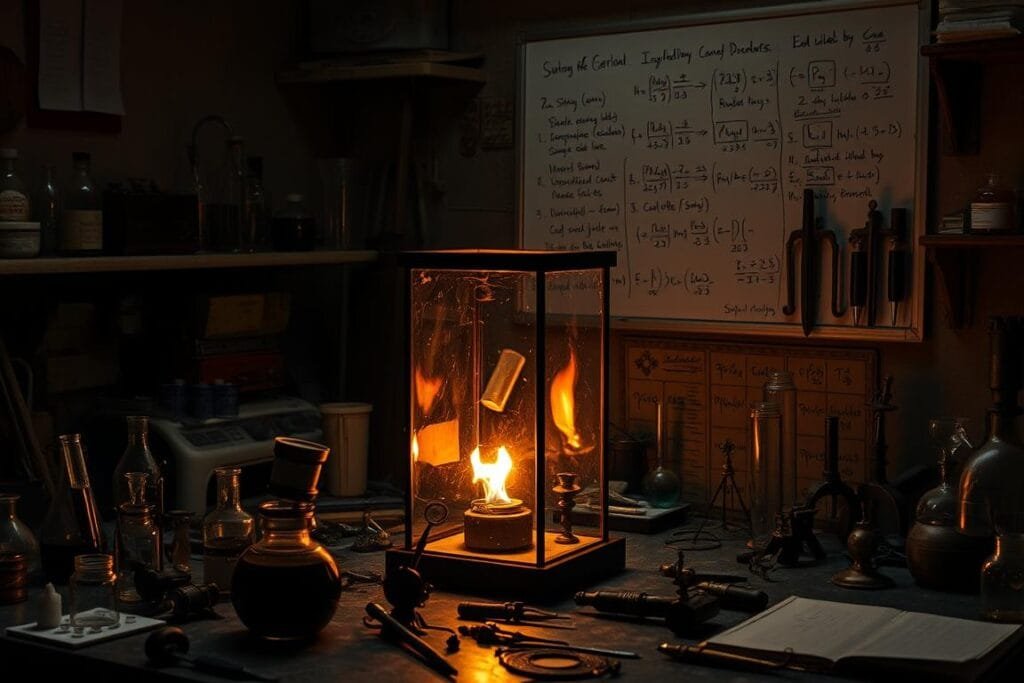
Forensic studies of these deaths usually find that:
- The victim was unable to react to the first flames because of age, illness, alcohol or medication
- A possible ignition source was present
- The fire burned slowly in a closed room, which limited its spread
Some forensic researchers prefer terms like “fat wick burning” to avoid suggesting that the body ignited by itself.
Skepticism and Controversies
Many of the most famous SHC stories are less mysterious than they first appear. Reports often leave out details such as cigarettes, candles or heaters, and early accounts were frequently exaggerated.
The Media’s Role
Sensational headlines helped keep SHC in the public imagination. In reality, the circumstances of most cases fit well with the wick effect: a vulnerable person, a small ignition source and a slow fire in a closed room.
The Voynich Manuscript: Facts, Theories and Decoding Attempts
Why the Idea Persists
The idea of spontaneous combustion survives because the scenes are genuinely shocking and the explanation is not obvious at first sight. In the 19th century, some writers even presented SHC as divine punishment for heavy drinkers, a moral story more than a scientific one.
Forensic and Legal Implications
When investigators face an unusual fire death, they examine the scene carefully:
- Detailed documentation of burn patterns
- Searches for ignition sources and accelerants
- Carbon monoxide levels in the blood, which show whether the person was alive during the fire
- Medical history, medication and alcohol use
The Bermuda Triangle: Disappearances, Myths and What Science Says
Conclusion
Spontaneous human combustion remains a fascinating topic, but the evidence points to a simpler explanation. In most cases, a small external flame and the wick effect can account for what investigators found.
A few cases still leave questions, which is why SHC continues to appear in books, documentaries and forensic debates.
FAQ
What exactly is spontaneous human combustion (SHC)?
SHC is the idea that a human body can catch fire without an external ignition source. It is used to describe deaths where a body was heavily burned while the surroundings were barely damaged.
Are there documented cases of spontaneous human combustion?
There are about 200 reported cases, including Mary Reeser in 1951 and Michael Faherty in 2010. Most can be explained by an external flame and the wick effect.
Is spontaneous human combustion scientifically proven?
No. There is no evidence that a body can ignite on its own. Forensic scientists explain most cases with the wick effect.
What is the wick effect?
It is a process in which clothing soaked in melted body fat acts like a candle wick, allowing a small flame to burn slowly for hours and consume much of a body.
Can alcohol cause spontaneous human combustion?
No. Alcohol in the body does not make a person flammable. However, heavy drinking can make someone unable to react to a small fire, which is a common factor in these cases.
Source Links
- Wikipedia: Spontaneous human combustion
- Britannica: Is spontaneous human combustion real?
- PubMed: Forensic review of SHC
- Forensic Science, Medicine and Pathology
- BBC News: Irish coroner rules spontaneous combustion
- NPR: To die or not to die from spontaneous combustion
- Journal of Criminal Law and Criminology