Some of history’s most impressive civilizations went into decline and left behind only ruins. The Indus Valley Civilization, which spread across more than a million square kilometers of what is now Pakistan and northwestern India, faded about 3,900 years ago. Its cities were abandoned and its script has never been deciphered.
These cases are often described as civilizations that “disappeared without explanation”. In reality, archaeologists have found many clues: climate change, drought, earthquakes, volcanic eruptions, war and the collapse of trade networks. Usually, it was a combination of factors, and the people themselves did not vanish. They moved, mixed with others and changed their way of life.
Key Takeaways
- Most ancient “disappearances” were gradual declines, not sudden vanishings
- Climate change and drought played a role in several collapses
- Descendants of many of these peoples still live in the same regions
- Some questions remain open, such as the meaning of the Indus script
- Archaeology keeps refining what we know about each case
Introduction to Ancient Civilizations
Ancient civilizations built cities, trade networks, monuments and writing systems that still impress us today.
The Eternal Flames of Nature: Earth’s Hidden Wonders
Defining Ancient Societies
- Advanced architecture and urban planning
- Writing or record-keeping systems
- Long-distance trade networks
- Organized religion and government
Overview of Five Declined Civilizations
| Civilization | Main Period | Region | Decline |
|---|---|---|---|
| Indus Valley (Harappan) | c. 2600-1900 BCE (mature phase) | Pakistan and northwestern India | After c. 1900 BCE |
| Minoan | c. 3000-1450 BCE | Crete | c. 1450 BCE |
| Olmec | c. 1200-400 BCE | Gulf Coast of Mexico | c. 400 BCE |
| Ancestral Puebloan | c. 100-1300 CE (Four Corners) | Southwestern United States | Late 1200s CE migrations |
| Mycenaean | c. 1600-1200 BCE | Mainland Greece | c. 1200 BCE |
The Indus Valley Civilization
Origins and Achievements
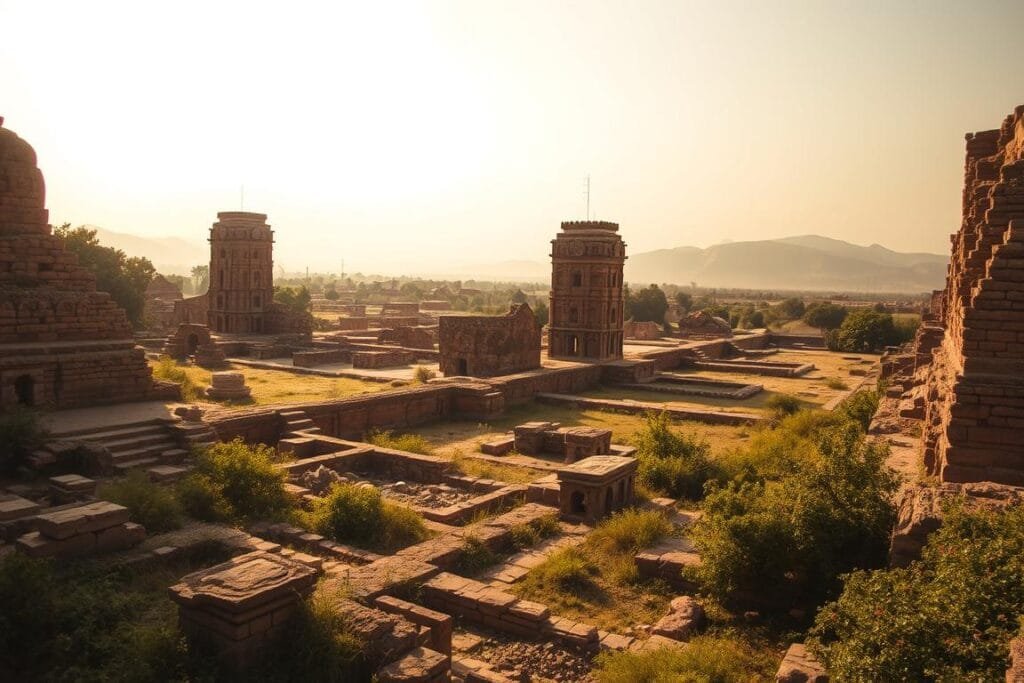
At its height, roughly 2600 to 1900 BCE, the Indus Valley Civilization was one of the largest of the ancient world. Its cities showed remarkable planning:
- Grid-like street layouts
- Covered drains and sophisticated sanitation
- Standardized bricks and weights
- Trade links reaching as far as Mesopotamia
Major sites include Harappa and Mohenjo-daro in Pakistan and Dholavira and Rakhigarhi in India. Mohenjo-daro may have had a population of around 40,000.
Theories Behind Its Decline
- A weakening of the monsoon and long periods of drought
- Shifting and drying rivers, including the Ghaggar-Hakra system
- The breakdown of long-distance trade
Populations gradually moved east and south into smaller villages. The civilization did not vanish overnight, but its great cities were abandoned.
The Most Isolated Tribes in the World: Hidden From Civilization
The Minoan Civilization
Cultural Significance
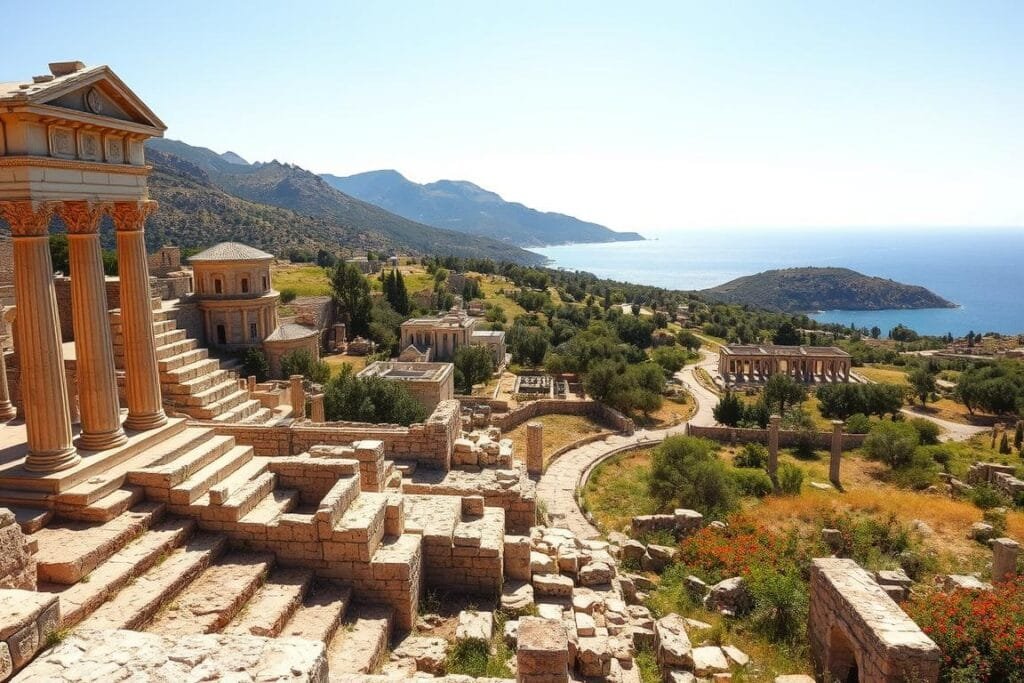
The Minoans of Crete were Europe’s first great Bronze Age civilization. They are known for:
- Palace complexes such as Knossos
- Colorful frescoes and fine pottery
- A wide maritime trade network
- Writing systems including Cretan hieroglyphs and the still undeciphered Linear A
The Thera Eruption
Around 1600 BCE, the volcano of Thera (modern Santorini) produced one of the largest eruptions of the last few thousand years. It buried the Minoan town of Akrotiri in ash and likely caused tsunamis that struck Crete.
The Fall of the Minoans
The eruption alone did not end Minoan civilization, which continued for more than a century. Around 1450 BCE, many palaces were destroyed, and Mycenaean Greeks from the mainland took control of Knossos. Earthquakes, economic disruption and conquest probably all played a role.
The Olmec Civilization
The Olmecs flourished along the Gulf Coast of Mexico from about 1200 to 400 BCE and are often called the “mother culture” of Mesoamerica.
- Monumental stone sculptures
- Ceremonial centers such as San Lorenzo and La Venta
- Long-distance trade in jade and obsidian
- Possible early forms of writing
Art and Cultural Influence
The Olmecs are famous for their colossal stone heads, some of which weigh well over 20 tonnes. Their art and religious symbols influenced later cultures such as the Maya.
Decline
After about 400 BCE, Olmec centers declined. Scholars suggest environmental changes in rivers, volcanic activity, agricultural problems and political shifts as possible causes.
The Ancestral Puebloans
The Ancestral Puebloans lived in the Four Corners region of the American Southwest, where they built the famous cliff dwellings of Mesa Verde and the great houses of Chaco Canyon.
Development of the Culture
- Basketmaker periods (c. 100-750 CE): farming and pit houses
- Pueblo I and II (c. 750-1150 CE): villages and the rise of Chaco Canyon
- Pueblo III (c. 1150-1300 CE): cliff dwellings and large villages
Remarkable Achievements
- Cliff Palace at Mesa Verde, with about 150 rooms
- Multi-story great houses such as Pueblo Bonito
- Hundreds of miles of ancient roads around Chaco Canyon
Drought and Migration
A severe drought from about 1276 to 1299, along with social conflict, led people to leave the Four Corners region by around 1300. They did not disappear. They migrated south and east, and their descendants include today’s Hopi, Zuni and Rio Grande Pueblo peoples.
The Mycenaean Civilization
The Mycenaeans dominated mainland Greece from about 1600 to 1200 BCE, with major centers at Mycenae, Tiryns and Pylos.
- Fortified palaces with massive “Cyclopean” walls
- Trade with Egypt, Anatolia and the Levant
- A bureaucracy recorded in Linear B, an early form of Greek
- A warrior elite with bronze weapons and chariots
Collapse
Around 1200 BCE, many Mycenaean palaces were destroyed as part of the wider Late Bronze Age collapse that affected much of the eastern Mediterranean. Proposed causes include:
- Drought and climate change
- Earthquakes
- Invasions and raids, including by the so-called “Sea Peoples”
- The breakdown of trade networks
Legacy
Greek language and many myths survived, and memories of the Mycenaean age shaped later Greek epics such as Homer’s Iliad.
Conclusion: The Lessons of Collapse
The fall of these civilizations shows how even advanced societies can be vulnerable to climate change, environmental stress and the breakdown of trade and politics.
It also shows that collapse is rarely the end of a people. In most cases, communities adapted, moved and carried their traditions into new forms, and archaeology keeps revealing more about how they did it.
FAQ
Why do ancient civilizations disappear?
Usually because of a combination of factors, such as drought, climate change, natural disasters, war, disease and the collapse of trade. Most declined gradually rather than suddenly.
Did the people of these civilizations vanish?
In most cases, no. They moved, mixed with other groups and changed their way of life. The Hopi and Zuni, for example, are descendants of the Ancestral Puebloans.
Which ancient civilization’s decline remains most mysterious?
The Indus Valley Civilization is often considered one of the most enigmatic, partly because its script has never been deciphered.
How do archaeologists study vanished civilizations?
They use excavation, radiocarbon dating, ancient DNA, climate records from lake sediments and caves, satellite images and lidar mapping.
What role does climate play in civilization collapse?
A major one in several cases. Long droughts are linked to the decline of the Indus cities, the Ancestral Puebloan migrations and the Late Bronze Age collapse.
Source Links
- Britannica: 6 lost civilizations
- History.com: Civilizations that mysteriously collapsed
- Wikipedia: Indus Valley Civilisation
- Wikipedia: Minoan civilization
- National Geographic: Minoan Crete
- Wikipedia: Olmecs
- National Park Service: Ancestral Pueblo people
- Britannica: Ancestral Pueblo culture
- World History Encyclopedia: Mycenaean civilization