Space is full of mysteries, but some of them are made on Earth. The Black Knight Satellite is a popular legend claiming that an alien spacecraft, possibly 13,000 years old, has been orbiting our planet and watching us.
The story combines several unrelated events from the 20th century: strange radio signals, early satellite sightings and a famous photo taken during a NASA mission in 1998. When each event is checked, the mystery largely disappears, but the legend remains one of the internet’s favorite space myths.
Key Takeaways
- The Black Knight is a legend built from several unrelated events
- The famous 1998 photo most likely shows a thermal blanket lost during a spacewalk
- A mysterious object tracked in 1960 was probably part of a U.S. Discoverer satellite
- There is no evidence of an alien satellite orbiting Earth
- The story shows how separate events can merge into a modern myth
Introduction to the Black Knight Satellite
Tens of thousands of objects orbit Earth today, from working satellites to spent rocket stages and small debris. Among them, believers say, is one object that does not belong to any country.
What Is the Legend?
According to the legend, the Black Knight:
- Is an alien probe in a near-polar orbit
- Has been around Earth for about 13,000 years
- Has sent radio signals since at least the late 19th century
None of these claims comes from a confirmed observation. They come from different stories that were later linked together.
Where the Legend Came From
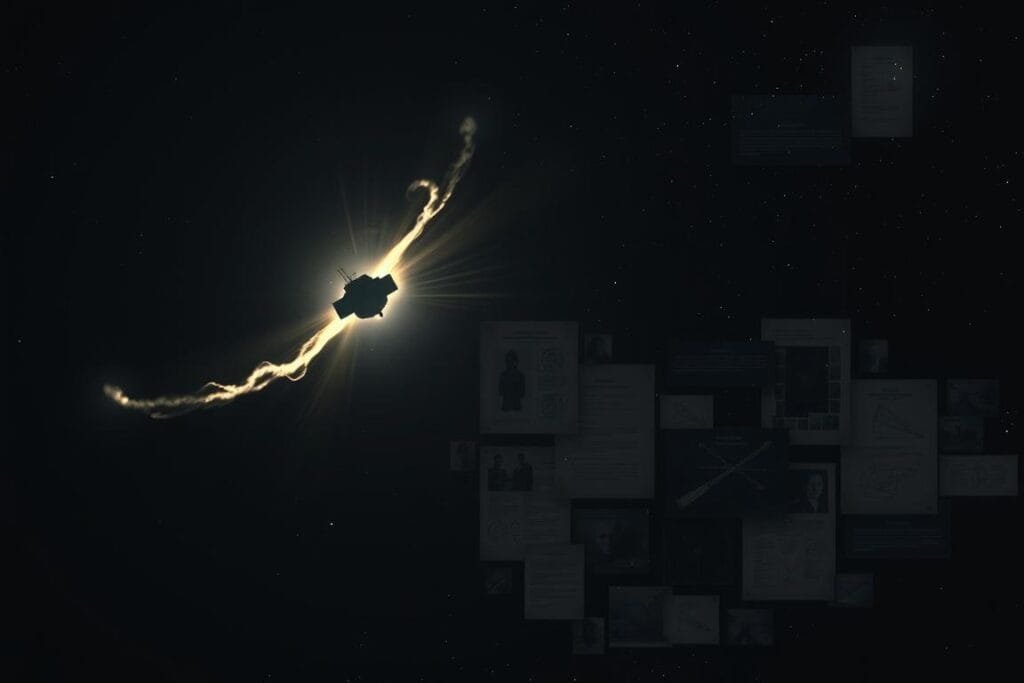
Tesla’s Mysterious Signals (1899)
In 1899, inventor Nikola Tesla reported picking up unusual repeating radio signals in his Colorado Springs laboratory, which he thought might come from another planet. Later researchers suggested they were natural radio emissions or interference. Black Knight believers later linked them to an alien satellite.
Keyhoe’s 1954 Claims
In 1954, UFO writer Donald Keyhoe claimed in newspapers that the U.S. Air Force had detected two unknown satellites orbiting Earth. At that time, no country had launched a satellite. No evidence supporting the claim was ever produced.
The 1960 “Dark Satellite”
In February 1960, U.S. tracking stations detected an unknown dark object in a polar orbit, and newspapers reported it as a mystery satellite. The U.S. military later concluded it was most likely debris from a Discoverer satellite launched in 1959, part of a secret reconnaissance program.
Duncan Lunan’s 1973 Theory
In 1973, Scottish writer Duncan Lunan analyzed radio echoes recorded in the 1920s and proposed they came from an alien probe near the Moon. He later withdrew his interpretation, but the idea became part of the Black Knight story.
The Famous 1998 NASA Photo
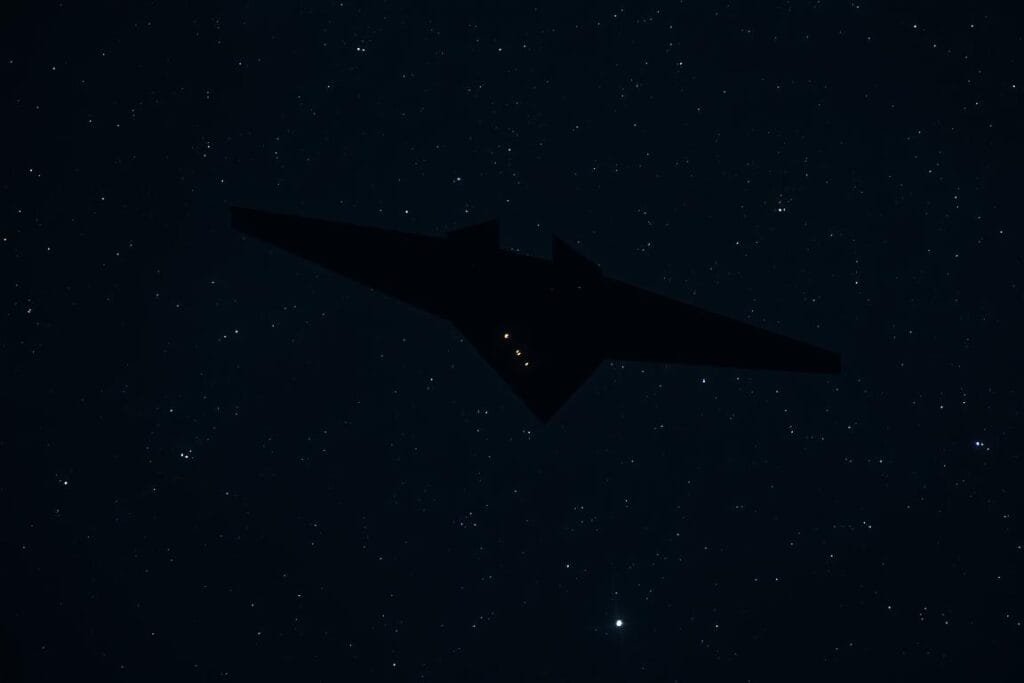
In December 1998, during the STS-88 space shuttle mission, the first mission to assemble the International Space Station, astronauts photographed a dark, oddly shaped object floating in orbit. These images are the ones most often shared as proof of the Black Knight.
Space historian James Oberg and NASA explained that the object was almost certainly a thermal blanket that astronauts Jerry Ross and James Newman lost during a spacewalk earlier in the mission. Reports from the mission describe the blanket floating away.
The Bermuda Triangle: Disappearances, Myths and What Science Says
Scientific Analysis
Could an Ancient Satellite Survive?
An object in low Earth orbit slowly loses altitude because of drag from the upper atmosphere. Without propulsion, a satellite at the altitudes described would not stay in orbit for thousands of years. Radar networks that track objects in orbit today have not found anything matching the legend.
| Year | Event | Most likely explanation |
|---|---|---|
| 1899 | Tesla’s radio signals | Natural radio emissions or interference |
| 1960 | Unknown object in polar orbit | Debris from a Discoverer satellite |
| 1998 | STS-88 photographs | Thermal blanket lost during a spacewalk |
Why Conspiracy Theories Like This Spread
The Black Knight story shows how myths are built:
- Unrelated events from different decades are linked into one story
- Real photos are shared without their original context
- Distrust of official explanations makes ordinary answers seem suspicious
Debunking Common Myths
| Myth | Reality |
|---|---|
| An alien satellite orbits Earth | No tracking network has detected one |
| It is 13,000 years old | The number has no known source or evidence |
| NASA photographed it | The photos show a lost thermal blanket |
As Carl Sagan often said, extraordinary claims require extraordinary evidence.
Conclusion
The Black Knight Satellite is a fascinating example of a modern myth. It combines real events, misunderstood observations and imaginative interpretations into one compelling story.
The real universe is full of genuine mysteries, and the story of the Black Knight is a good reminder to check the evidence behind the ones we share.
FAQ
What exactly is the Black Knight Satellite?
It is a legend claiming that an ancient alien satellite orbits Earth. There is no evidence that such an object exists.
Who first discovered the Black Knight Satellite?
Nobody discovered it. Believers often link it to Nikola Tesla’s 1899 radio signals, but Tesla never described a satellite, and the legend was assembled later.
What does the 1998 NASA photo show?
The photo, taken during the STS-88 mission, most likely shows a thermal blanket that astronauts lost during a spacewalk.
Could the Black Knight Satellite be real alien technology?
There is no evidence for it. Objects in low orbit fall back over time, and tracking networks have never detected anything matching the legend.
Why do people continue to believe in the Black Knight Satellite?
The story is exciting, mixes real events and photos, and plays on curiosity about alien life and distrust of official explanations.